Showing posts with label the hunt show. Show all posts

Friday, April 8, 2016

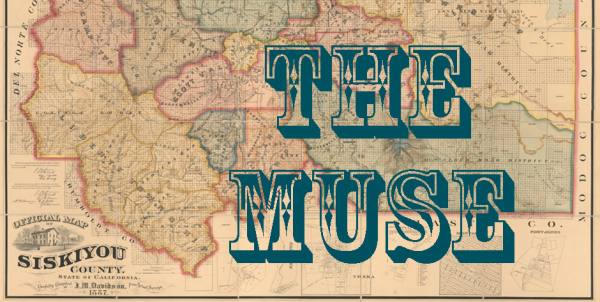
The Muse - an invitational group show


Woking in collections, archives and museums plays a huge part in my artistic practice. Collections are important aspects of understanding how we got here and where we need to go. Since culture is embedded with deep patterns, contemporary North American humanity attempts to deal with grief through the memorial institution often by collecting cultural property. These objects can be used for their narrative properties or their ability to filter memory, shame and support a structure of violence. Objectifying the universe is an attempt to find a kind of order by making the emotional grief visible through intellectual means. Often at large consequences to minority cultures, there practices looted cultural and environmental property. Actions of violence, dehumanization and continuing avoidance practices and colonization created by many "Collectors" is embedded in the contemporary museum interpretation practices.

In 2011, I conceptualized and curated The Hunt Show, which showed at the Hoffman Gallery, Portland, OR. I selected, organized and guided 25 artists and three archivist through a facilitated scavenger hunt in the OHSU medical archives. This engaged the artists, medical professionals and the public in a mediated dialogue about health practices through contemporary and historical reference.

Recently, I was asked by my beloved friend and fabulous curator, Moe Williams, if she could use "The Hunt" show as inspiration for The Muse.  And then she told me her wonderful and exciting new plan! I told her not only would I love that and I want to participate!

The Muse exhibition is a collaboration between Liberty Arts and The Siskiyou County Museum of Yreka. This invitational group show consists of over 20 local and regional artist who will visit with a specific piece at the museum and will then utilize the artifact as inspiration for one awesome new creation of artwork to be shown at the Liberty Arts Gallery and then displayed at the Siskiyou County Museum. 

This will be a great opportunity for artists and viewers to reflect on the importance of the unique collections of Siskiyou County. Within this exhibition, The Muse, will play homage to and awaken history through contemporary eyes and new interest for the rich stories and artifacts collected by our predecessors. The Siskiyou County Museum is full of hidden gems, unknown tales of triumphs, hardships and unlikely heroes. Their sacrifices, way of life, stories and everyday materials were important enough to be preserved and now we respectfully breathe new and interesting life into them.


The Muse runs from April 1 thru May 6th.
Opening Reception, April 1 5:00 p.m. to 7 p.m.

108 W. Miner Street
Yreka, CA 96097

Gallery Hours:
Wed - Sat: 10 a.m to 5 p.m.
Sunday, Monday & Tuesday Closed

Phone: 530 - 842 - 0222


Saturday, December 1, 2012

Object Acquisition # 77-285.1.3 Magneto-Electric Machine

 Documenting objects from The Hunt Show:


Object Acquisition # 77-285.1.3 Magneto-Electric Machine
Object Interpreted and Statement by Marilyn Joyce


“I am busy just now again on Electro-Magnetism and think I have got hold of a good thing but can't say; it may be a weed instead of a fish that after all my labour I may at last pull up.”         

Michael Faraday (1791-1867) contributor to the fields of electromagnetism and electrochemistry.


Through the turn of a crank, rotating magnets generate an electric current, passing through cloth-covered wire and metal handles. The surge, an electrical force penetrates the skin, then deeper into the tissue, reaching the place of stored pain.  The buzzing sensation professed to be the magical force of the ‘cure’ pulsates through the body of the anxious patient…

This piece references the nervous system that was treated by the Electro Magnetic Machine during the mid 1800’s, my object for The Hunt. I was attracted to the types of disorders that people suffered from and sought treatment for: exhaustion due to overwork, insomnia, melancholia, poor circulation, female and male weaknesses, head pains – echoing what so many people struggle with in our contemporary culture.

The materials selected, thin paper on which a transparent print of my back rests, veils a second paper with marks built in layers, waxed and ink stained - an internal world that lies underneath, felt but hidden from view -  vibrations, agitation, short bursts, pulses, rhythmical beating -  a network of energy as it  flows through our nervous system.

As I marked, I reflected on what people may have experienced prior to treatment: vulnerability, isolation, shame and fear  -  laced with hope for a cure and the freedom of life without pain - which ultimately did not transpire with the use of this 
machine.


This image was printed from the body 
and had an amazing drawing underneath. 
This drawing illustrated the internal nature.
This photo doesn't capture the 
feeling of this image in person.


Closer detail.


Curators note:
This pieces was thoughtful and provoking into the inner workings of the human body and feelings. Very powerful.

Friday, September 14, 2012

Object Acquisition # 77-131.2.5 Aspirating Syringe


Documenting objects from The Hunt Show:


Object Acquisition # 77-131.2.5 Aspirating Syringe
Object Interpreted and Statement by Maria Cardenas

I was completely and utterly excited about this project, and then I saw my chosen object…excitement turned to fear. How can I find inspiration from an object that inflicts pain? 

The Brass Aspirating Syringe was beautifully crafted in 1887 - how could I not be inspired by a 124 year old piece of medical equipment? I had to find another way to fully embrace this distinctive device. 

No one I know enjoys the prospect of being injected. But it is a necessary and vital part of everyone’s life medically today, just as it was more than a century ago. How do you feel when faced with physical or emotional pain? How do you cope with it, knowing it’s coming and inevitable? 

What allows me to endure and cope during these moments – is the simple ability to breathe. This brings me great solitude, deep breathing, slow and steady.  


Curators Note: Complete Beauty... The simplicity of breath.


Saturday, February 11, 2012

Object Acquisition # 2001-014 McLean Book Plate

Documenting objects from The Hunt Show:


Object Acquisition # 2001-014 McLean Book Plate
Object interpreted and Statement by: Jessie Benenson


"The McLean Prospected Fund Memorial Scholarship Trust"


The OHSU Archive is haunted by traces of the lives of medical practitioners, researchers and patients. A medical archive is filled primarily by the words and materials of dead men and women. Doctors and Institutions leave their papers to an archive in the hopes that their lives and sacrifices were important enough to be maintained and preserved. It is interesting to wonder at what is saved and even more intriguing to speculate what is not included; what stories are lost.


There is no way to catalog a life and even if there were, there is no way to control the way information is disseminated after you are gone. A brilliant and arrogant brain Surgeon donated his book collection to the archives perhaps in the anticipation they would be useful in the future.


My "object" in the scavenger hunt were the hand painted book plates. The Surgeon's attitude about death and what lies after, seemed to thumb a nose at a spiritual passage, and he asks specifically for his name to sink into oblivion. But the grotesque figures in the book plates look to me to be roguish Spirits who have not only kept the Surgeon alive in the archive, but let his personal story mutate into a fable. I used his own words, excerpted from his will, but I alternate them with my imagined puppet play. The Spirits form the book plate seemed vaguely Balinese to me, and drawing from my knowledge and love of puppet making, I fabricated a small shadow theater featuring the Spirits and my re-imagined Surgeon.


I have read that brain surgeons are often seen as "playing God," and if that is true, artist do it as well. I have taken information from the OHSU library, and shaped into a narrative of my own device, and to serve my own purpose.


Curator's Note:
This shadow puppet play was softly lit from the inside but yet showed the Surgeon in his true vocation. I am ever amazed at the artists in my life.... Jessie Benenson also grew and had a baby during the making of this piece. I want to thank her and her wonderful husband Ian for support and advising this project when itself was in utero to its fruition.  

Thursday, January 5, 2012

Object Acquisition # 77-108.1.33 Cautery Transformer

Documenting objects from The Hunt Show:


Object Acquisition # 77-108.1.33 Cautery Transformer
Object interpreted and Statement by: Isaac Yoder


Veil

The cautery transformer I had picked at random was manufactured in 1928 by The Wappler Electric Company during the tail end of the Comstock laws. At the time public opinion and federal law made it impossible for physicians to disseminate any information regarding contraceptive or reproductive health. The electrical device was used by a local obstetrician for cervical and surgical cauterization. Looking at the object, I was instantly reminded of the wood burning kit my older sister had given me one year as a birthday gift.

Veil, is a series wood burning based off of a selection of historical painting depicting the annunciation; The annunciation is the point at which the angel Gabriel appears to Mary and informs her she will conceive and give birth. Annunciation paintings are accompanied by a criteria of symbolism, all geared at informing the viewer of Mary's pure nature. the original paintings(and source material for my work) dating back from 1436 up onto 1712 were created during the wide spread witch hunts of Western Europe, in an age where seeking out information regarding one's reproductive health was criminalized. Midwives, who had originally been the source of information pertaining to birth control, were labeled witches, hunted down and executed.

I chose to focus solely on Mary's face - all of Mary's faces, at the most critical moment of her life. I wanted to show who she was -- not what she was. I delineated the planes and values of each face as if they were parts of a map, or the wavy lines of a cat scan, to present this historical figure in a contemporary context.


Curator's Note:
I think it is amazing how history comes back on itself... People today are still fighting for reproductive health rights to remain safe and available yet people are quick to burn the witch or critique the single mother. Amazing work!


Thursday, December 8, 2011

Object Acquisition # 77-129.6.6 Rubber Stamps: Interior of Eye

Documenting objects from The Hunt Show:


Object Acquisition # 77-129.6.6 Rubber Stamps of the Interior of the Eye


Object interpreted and Statement by: Elyse Gambino
to see more of her work go to www.elysegambino.com


Sometimes I forget how creative scientists must be, that Charles Darwin loved to draw and sketch. In my studio I often feel like an explorer making new discoveries, a scientist experimenting with ideas and testing my hypothesis. Art and science are intertwined conceptually as well as historically, and going into OHSU and completing this project gave me the opportunity to examine art and science in a different way. My pieces from the Hunt are creative representations of parts of human anatomy: a set of stamps used for medical publications. I made a large scale "stamp" to hang on the wall and made the subject matter imaginative rather than representational. I was particularly drawn to the stamp of the ocular cavity and had fun experimenting with symbols and objects that are a solely artistic portrayal of the inside of my own eye.


Curators note: Elyse also printed this block. The empty box under the print block was full of prints. 

Thursday, November 17, 2011

Object Acquisition # 77-363.1 Pneumothorax Apparatus

Documenting objects from The Hunt Show:


Object Acquisition # 77-363.1 Pneumothorax Apparatus
Object interpreted and Statement by: Dorothy Sharrar

The object I "found" was a Pneumothorax Apparatus. It was used in the 1930's to collapse a lung diseased by tuberculosis, allowing it to heal while the patient breathed through the other lung. The process was called "resting the lung" and it could take months or years for healing to take effect. There was only about 50% chance of success.

My response to the object was elicited from my family history and my father's personal experience of losing both of his sisters and his father to tuberculosis. Tuberculosis was a stigma, a family secret that my father was taught not to divulge to anyone at the time because of the disgrace it would bring to the family.

During the process of working on this project, I thought a lot about the aunts and the grandfather I never knew, about my grandmother who endured the loss of her daughters and her husband to the disease, and about my father who fed his sister her last meal at 21 years old, witnessing her struggle for breath and life to the very end.

I used materials and processes that were able to reflect the qualities of breathing-- movement, transparency, weightlessness; and at the same time the qualities of the disease process-- the struggle to breathe, the strictures and scarring from the disease as well as from the veil of secrecy surrounding it. I chose to work with fabrics and hand-sewing, utilizing found handkerchiefs; a common item used for personal hygiene, they hold a sense of intimacy and fragility-- cared for, monogrammed, embroidered, tatted-- valued as a personal possession, reflective of the era in which they were used.

My piece is titled "For Kathryn" in memory of my aunt.


Curator's note: Small white crosses embroidered over and over, meditation and reflection.

Wednesday, November 9, 2011

Object Acquisition # 77-28.2.66 Drug Kit

Documenting objects from The Hunt Show:


Object Acquisition # 77-28.2.66 Drug Kit
Object interpreted and Statement by:
Derek Faust  www.derekfaust.com


Using my designated object, a late 19th century traveling doctor’s medicine kit, I created “graduated cylinder” using acrylic, mylar and uhmf plastics. I used the shape of the vials filled with various chemicals and remedies to inspire my material choices. Also housed in the kit was a variety of scratch papers, when folded these acted as containers for the doses of powdered medicines to be taken by a patient. 

My process began by investigating the visual and conceptual elements of the object. Then I worked with this element through a minimalist and formal approach using materials that resonated with the original but in a contemporary context.  I created “graduated cylinder” so that without the original object or context the work would read as a simple gesture, an exploration in an arrangement of materials, whilst within the context the piece begins to reveal the language of the tubes and vials of medicines from the doctor’s kit.


Curators Note: This is a great reminder for myself... the more you take away the better and more wonderful it can be....

Friday, October 21, 2011

Object Acquisition # Spratt, G.

Documenting objects from The Hunt Show:


Object Acquisition# A newly acquired book with anatomical flaps: Spratt, G. Obstetric Tables: Comprising Graphic Illustrations, with Descriptions and Practical Remarks: Exhibiting on Dissected Plates Many Important Subjects in Midwifery. Philadelphia: James A. Bill, 1850
Object interpreted and Statement by Cyan Bott


Thank you for looking.

Can anything be art when imbued with meaning? Is it art or is it memory?

Do they function the same?

For this piece, I was working from the memory of an object, trying to recreate that memory in tangible form. That image that I saw initially - and the meaning I took from it - were the jumping-off point. From there it was just a free-fall of responding to the materials at hand.

Process - based work, created by the natural rhythms of the hands, has a different resonance than that which is premeditated. There is room for evolution, immediacy and expressiveness when responding to things as they surface. It's a process of decision making and being able to follow your gut. Ultimately it is all about the confidence you have in your decisions and the actual conviction behind them.

For me, making is an escape from intellectualism, It's one of the few things that I can do on autopilot, using my eyes and hands to guide me.

"Manipulating material is a way to speak."
Jessica Stockholder


Sunday, October 16, 2011

More Heart Valves:


OHSU will be highlighting M.Lowell Edwards... 

the co-inventor of the Starr Edwards Heart Valve that our hunt show artist Clare Carpenter interpreted. 

Hope you can check out these great artifacts.


New exhibit: Oregon's M. Lowell Edwards: 

Co-Inventor of the Starr-Edwards Heart Valve


MILES LOWELL EDWARDS (1898 TO 1982)